Prompt Engineering 101: How to Talk to AI Systems Effectively
This blog is a practical, non-technical guide to prompt engineering, showing everyday users how to get better results from AI tools like ChatGPT by giving clearer instructions. It explains how to define goals, provide context, use examples, break tasks into smaller steps, and refine answers through conversation, turning AI from a hit-or-miss experiment into a reliable assistant for real work.
1/23/20232 min read

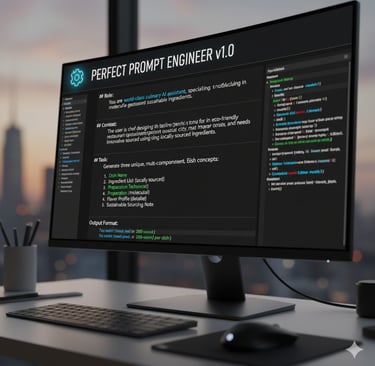
You don’t need to be a programmer to get great results from AI tools like ChatGPT or other large language models. But you do need to learn how to “talk” to them. That’s what prompt engineering is: the skill of asking AI the right way so you get useful, clear, and reliable answers. Think of it as moving from “vague request” to “clear brief.”
1. Be Clear About Your Goal
Before you type anything, ask yourself: What do I actually want?
Instead of:
“Write something about marketing.”
Try:
“Write a 300-word LinkedIn post about why small businesses should start an email newsletter, in a friendly but professional tone.”
You’re telling the AI:
What to write (LinkedIn post)
Topic (small businesses, email newsletters)
Length (300 words)
Tone (friendly but professional)
The more you spell out your goal, the less guessing the AI has to do.
2. Give Context, Not Just Commands
AI works better when it knows who you are and who it’s for.
Instead of:
“Explain Bitcoin.”
Try:
“Explain Bitcoin to a 16-year-old who knows basic online banking but doesn’t know anything about cryptocurrencies. Use simple examples and avoid technical jargon.”
Now the AI can tailor the explanation to the right level and audience.
3. Show, Don’t Just Tell
If you want a specific style or structure, give an example.
Example:
“Here’s a sample product description I like:
‘A compact, wireless keyboard designed for fast typing and minimal desk space, perfect for remote workers and students.’
Now write a similar-style description for a wireless mouse designed for graphic designers.”
By showing a pattern, you give the model something concrete to imitate.
4. Break Big Tasks into Smaller Steps
LLMs do better when you chunk complex tasks.
Instead of:
“Write a full 10-page report on remote work trends with references.”
Try:
“Give me a bullet-point outline for a 10-page report on remote work trends.”
“Now expand the introduction section to around 400 words.”
“Write the section on productivity impacts, about 600 words, using the outline above.”
You stay in control, and the AI builds the content piece by piece.
5. Tell the AI How to Format the Answer
If you care about structure, say so.
For example:
“Summarize this article in 5 bullet points, then give me a one-sentence takeaway at the end.”
Or:
“Explain this error message, then give me a step-by-step checklist to fix it.”
You’re not just asking what you want, but how you want it delivered.
6. Iterate: Treat It Like a Conversation
Prompt engineering isn’t “get it perfect in one shot.” It’s more like a back-and-forth.
“Make it shorter.”
“Use simpler language.”
“Add two real-world examples.”
“Rephrase this for an email to my manager.”
Each follow-up is also a prompt. Good users don’t stop at the first answer—they refine.
7. Set Boundaries and Constraints
If you don’t want fluff or certain content, say it clearly.
“Explain this concept in under 150 words, no jargon, and don’t use bullet points.”
“Write pros and cons of remote work, but don’t mention COVID.”
Constraints reduce noise and keep the answer focused.
Final Thought: Think Like an Editor, Not a Magician
Prompt engineering isn’t about magic words—it’s about giving clear instructions. The AI is a powerful assistant, but you are still the editor and decision-maker.
If you can describe what you want—goal, audience, style, structure—you’re already doing prompt engineering. And with a bit of practice, you’ll find that talking to AI can feel less like “trying your luck” and more like working with a capable colleague who just happens to respond in milliseconds.